July 8 2026
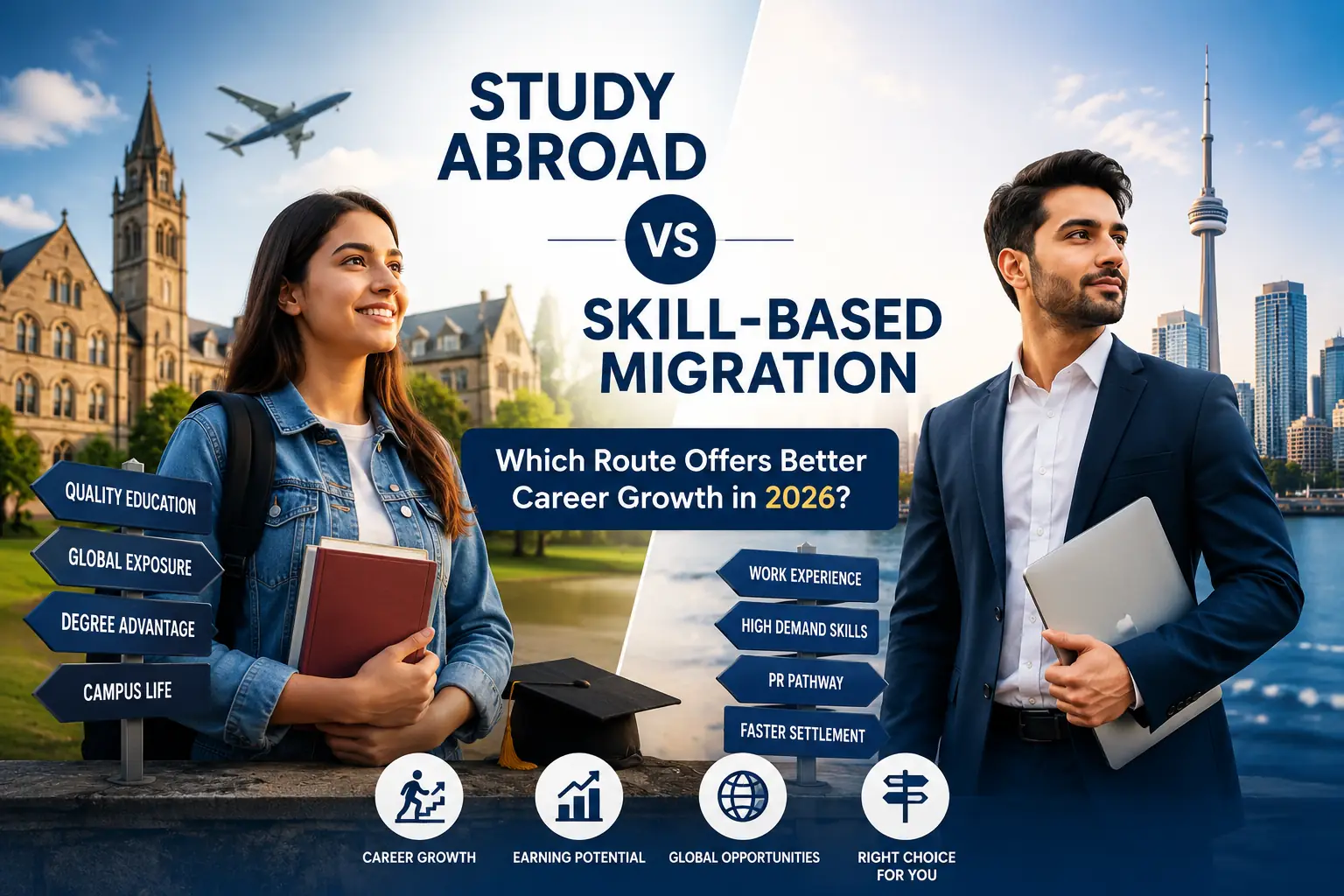
Study Abroad vs Skill-Based Migration: Which Route Offers Better Career Growth in 2026?
Two people aspire to build a career abroad. One enrols in a university overseas to gain an internationally recognised qualification and local work experience. The other applies directly for a skilled migration visa, relying on years of professional experience. Although they share the same goal, they choose very different routes to achieve it.
Which is the right choice? It entirely depends on factors such as your education, work experience, career stage, financial situation and long-term goals. As countries like Australia and Canada continue to refine their immigration priorities in 2026, deciding between these pathways has become more important than ever.
This guide compares study abroad vs skill-based migration, helping you understand the costs, eligibility requirements, career opportunities and recent policy changes so you can choose the option that best aligns with your future.
Understanding the Difference Between Studying Abroad and Skill-Based Migration
Although both pathways can help you build a successful international career, they are designed for different applicants.
Study Abroad
Studying abroad involves pursuing a degree or qualification at a recognised institution in another country on a student visa. Along with earning an internationally recognised qualification, you will gain global exposure, experience a new culture and develop valuable professional connections.
Many countries also offer post-study work opportunities that allow eligible graduates to gain local work experience and, where eligible, explore pathways to permanent residency.
Studying abroad may be the right choice if you:
- Have recently completed school or university.
- Have little or no professional work experience.
- want to earn an internationally recognised qualification.
- Plan to build a long-term career in another country.
- Are looking to develop both academic and professional skills before entering the global job market.
Skill-Based Migration
Skill-based migration allows qualified professionals to apply for a visa based on their education, work experience, occupation, language proficiency and other eligibility criteria. Depending on the country, applicants may need to complete a skills assessment, meet points requirements or secure employer sponsorship. In the student visa vs PR pathway, this option is generally better suited for experienced professionals who already possess qualifications and skills that are in demand internationally.
Study Abroad vs Skill-Based Migration: A Side-by-Side Comparison
Choosing between study abroad or skilled migration requires more than comparing visa types. Consider how each option aligns with your current profile and future goals.
| Factor | Study Abroad | Skill-based Migration |
| Primary Purpose | Gain an international qualification and local experience | Secure employment and relocate based on professional skills |
| Best Suited For | Students and recent graduates | Experienced professionals |
| Education Requirement | Admission to an overseas institution | Recognised qualification relevant to your occupation |
| Work Experience | Usually not mandatory | Often essential |
| Initial Investment | Higher due to tuition and living expenses | Lower education costs but includes assessments, language tests, and visa fees |
| Time to Workforce | After graduation | Immediately upon securing employment or visa approval |
| Long-Term Career Growth | Strong through local education and networking | Strong if your occupation remains in demand |
| Pathway to Permanent Residence | Possible, subject to eligibility | Possible through skilled migration programs |
Neither option is universally better. The right choice depends on your qualifications, career stage and long-term objectives.
What's New in Study Abroad and Skill-Based Migration in 2026?
Immigration policies are evolving to address workforce shortages and economic priorities. In 2026, Australia retained its 2026-27 Permanent Migration Program at 185,000 places, with 132,240 places (around 71%) allocated to the Skilled Stream, reinforcing its focus on attracting qualified professionals. The government also increased allocations for Employer Sponsored and Skilled Independent visas. Canada has also updated its category-based Express Entry system, giving greater priority to applicants in high-demand sectors such as healthcare, STEM, education, skilled trades, transport and French-language occupations.
These updates show that choosing the right pathway now depends more than ever on your qualifications, work experience and long-term career goals rather than following a single approach.
https://www.canada.ca/en/immigration-refugees-citizenship/
Disclaimer: Immigration policies, visa requirements and occupation lists may change. Always refer to official government websites or consult a qualified advisor before applying.
Which Option Is More Affordable?
Your budget plays an important role when choosing between studying abroad and skill-based migration. Studying abroad typically requires a higher upfront investment including tuition fees, accommodation, living expenses, health insurance, visa fees and travel costs. Skill-based migration generally has lower initial costs since there are no tuition fees. However, you will still need to budget for skills assessments, IELTS or PTE tests, medical examinations and visa application fees.
Budgeting Tip: Estimate all application and relocation costs in advance and keep an emergency fund to cover your initial living expenses after moving abroad.
Which Countries Offer the Best Opportunities in 2026?
Different countries offer different advantages depending on whether you plan to study or migrate through a skilled visa.
| Country | Study Abroad | Skill-based Migration |
| Canada | Excellent | Excellent |
| Australia | Excellent | Excellent |
| Germany | Excellent | Good |
| Ireland | Excellent | Moderate |
| New Zealand | Good | Excellent |
| UK | Excellent | Limited PR Pathway |
Here's a quick overview:
- Canada: The country offers world-class universities, post-graduation work permits and strong demand for professionals in healthcare, technology, skilled trades and education.
- Australia: As one of the best countries for skilled migration, Australia combines a high skilled migration system with excellent universities which is particularly for occupations experiencing workforce shortages.
- Germany: An attractive destination for engineering, manufacturing, IT and research, with affordable education at many public universities.
- Ireland: Popular among international students because of its growing technology and pharmaceutical industries, along with graduate work opportunities.
- New Zealand: Continues to attract skilled workers in healthcare, construction, agriculture and engineering while offering quality higher education.
- United Kingdom: Remains a leading study destination with its Graduate Route visa, although the pathway to permanent residency is more limited than in some other countries.
In-Demand Occupations in 2026
Countries such as Australia, Canada, Germany and New Zealand continue to experience skill shortages across several industries. Professionals working in healthcare and nursing, information technology (IT), cybersecurity, software development, data science and analytics, engineering, construction and skilled trades, renewable energy and teaching are expected to have strong employment opportunities in 2026. These sectors remain a priority because of ageing populations, rapid digital transformation, infrastructure development, and the transition to clean energy.
Who Should Choose to Study Abroad?
Studying abroad may be the right option if you:
- Have recently completed school or university.
- Want an internationally recognised qualification.
- Have limited professional work experience.
- Are planning a career change.
- Want to gain international exposure before entering the workforce.
- Intend to pursue research or higher education in the future.
Who Should Choose Skill-Based Migration?
When we compare study abroad vs skill-based migration, Skill-based migration is often a better choice if you:
- Have several years of relevant work experience.
- Work in a high-demand occupation.
- Meet language proficiency requirements.
- Want to begin working immediately after arrival.
- Are an IT professional, engineer, healthcare worker, accountant or skilled tradesperson.
- Already qualify under a points-based or employer-sponsored immigration program.
Common Mistakes to Avoid
Many applicants face delays or setbacks because of avoidable mistakes. Before applying, make sure you:
- Research job demand in your preferred country.
- Understand the permanent residency pathway before choosing a destination.
- Aim for competitive IELTS or PTE scores.
- Select courses that align with future employment opportunities.
- Verify information from official government sources instead of relying solely on third-party advice.
- Budget for tuition, visa costs, and living expenses to avoid financial stress after moving abroad.
How Berakah Elite Helps You Choose the Right Path
Choosing between international education vs skilled migration can be challenging, especially when every applicant has different qualifications, career goals and financial circumstances. At Berakah Elite, we offer personalised guidance from overseas education consultants to make the right decision based on your unique profile. Our services include career counselling, country selection, university admissions, visa assistance, SOP guidance, scholarship support, skill-based migration consultation, IELTS guidance and post-admission assistance. Whether you are planning to pursue study abroad for career growth or explore skilled migration opportunities, our experienced counsellors will assess your profile and recommend the pathway that best aligns with your qualifications, career aspirations and budget.
Conclusion
Study abroad vs skill-based migration- There isn't a single pathway that is right for everyone. If you are looking for an internationally recognised qualification, global exposure and long-term career development, studying abroad may be the ideal choice. On the other hand, if you already have valuable work experience and meet the eligibility requirements, skill-based migration could help you begin your overseas career more quickly. Before making a decision, evaluate your education, professional experience, budget considerations and long-term goals. Understanding the latest immigration policies and seeking expert guidance can help you make a more informed decision and improve your chances of success in 2026. If you're looking for trusted study abroad consultants in Kerala or expert advice on skill-based migration, Berakah Elite is here to help. Contact our experienced counsellors today for personalised guidance on choosing the right international career pathway and take the first step towards achieving your global career goals.
FAQs
1. Is studying abroad better than skill-based migration?
It depends on your education, work experience, budget and long-term career goals. Studying abroad is often ideal for recent graduates seeking an international qualification and local work experience, while skill-based migration is better suited to experienced professionals who already meet immigration requirements.
2. Which countries offer both study abroad and skill-based migration pathways?
Countries such as Canada, Australia, New Zealand and Germany offer strong opportunities through both international education and skilled migration programs. These destinations also have growing demand for qualified professionals across various industries.
3. Can international students apply for permanent residency?
Yes. Many countries allow eligible international graduates to apply for post-study work permits, which can help them gain local work experience. Depending on the country's immigration policies and eligibility criteria, this experience may lead to permanent residency pathways.
4. Is skill-based migration cheaper than studying abroad?
In most cases, yes. Skill-based migration usually involves lower upfront costs because it does not include tuition fees. However, applicants should still budget for language tests, skills assessments, medical examinations, visa fees and relocation expenses.
5. Which option is better for recent graduates?
For most recent graduates with little or no work experience, studying abroad is often the better option. It provides access to internationally recognised qualifications, internships, post-study work opportunities and valuable industry connections that can support long-term career growth.
6. Which is better, studying abroad or applying for permanent residency (PR)?
It depends. If you already qualify for permanent residency through a skilled migration program, applying directly may save both time and money. However, if you are a recent graduate or do not yet meet PR eligibility requirements, studying abroad can help you gain an internationally recognised qualification, local work experience and potentially become eligible for permanent residency later.
7. Can I get permanent residency (PR) after studying abroad?
Yes, many countries offer permanent residency pathways for eligible international graduates. In most cases, students first complete their studies, obtain a post-study work visa, gain relevant work experience and then apply for PR if they meet the country's immigration requirements. However, studying abroad does not guarantee permanent residency.
8. Which country is easiest for skilled migration in 2026?
There is no single "easiest" country, as immigration policies and eligibility requirements vary. Countries such as Australia, Canada, New Zealand and Germany continue to offer skilled migration pathways for professionals in high-demand occupations. Your chances of success depend on factors such as your qualifications, work experience, language proficiency and whether your occupation is in demand.
9. Is studying abroad worth it in 2026?
Yes. Studying abroad can provide access to internationally recognised qualifications, practical learning, global networking opportunities and post-study work options. It can also improve long-term career prospects, especially when you choose a course that aligns with labour market demand in your destination country. However, the return on investment depends on selecting the right course, country and career path.

Recent updates

AI Is Changing University Admissions: How Students Can Build an Application That Still Stands Out
September 23 2026
Scholarships for Indian Students in 2026: Funding Opportunities You Should Know About
September 23 2026
Study Abroad Without the Big Four: Which Emerging Destinations Are Gaining Indian Students in 2026?
September 17 2026

Green Jobs Abroad in 2026: Which Degrees Can Lead to Careers in Renewable Energy, ESG & Climate Tech?
September 16 2026
Student Visa Rules in 2026: Latest Updates Every Indian Student Should Know
August 10 2026
Best Cities in New Zealand for Indian Students in 2026: Jobs, Rent, Student Life & Part-Time Opportunities
August 6 2026
AI-Proof Careers Abroad: Degrees That Will Stay Relevant Beyond 2030
July 13 2026
Global Talent Shortage Report 2026: Courses Leading to the Highest-Demand Jobs Abroad
July 11 2026
Countries That Allow International Students to Bring Dependents in 2026
July 4 2026