May 12 2026
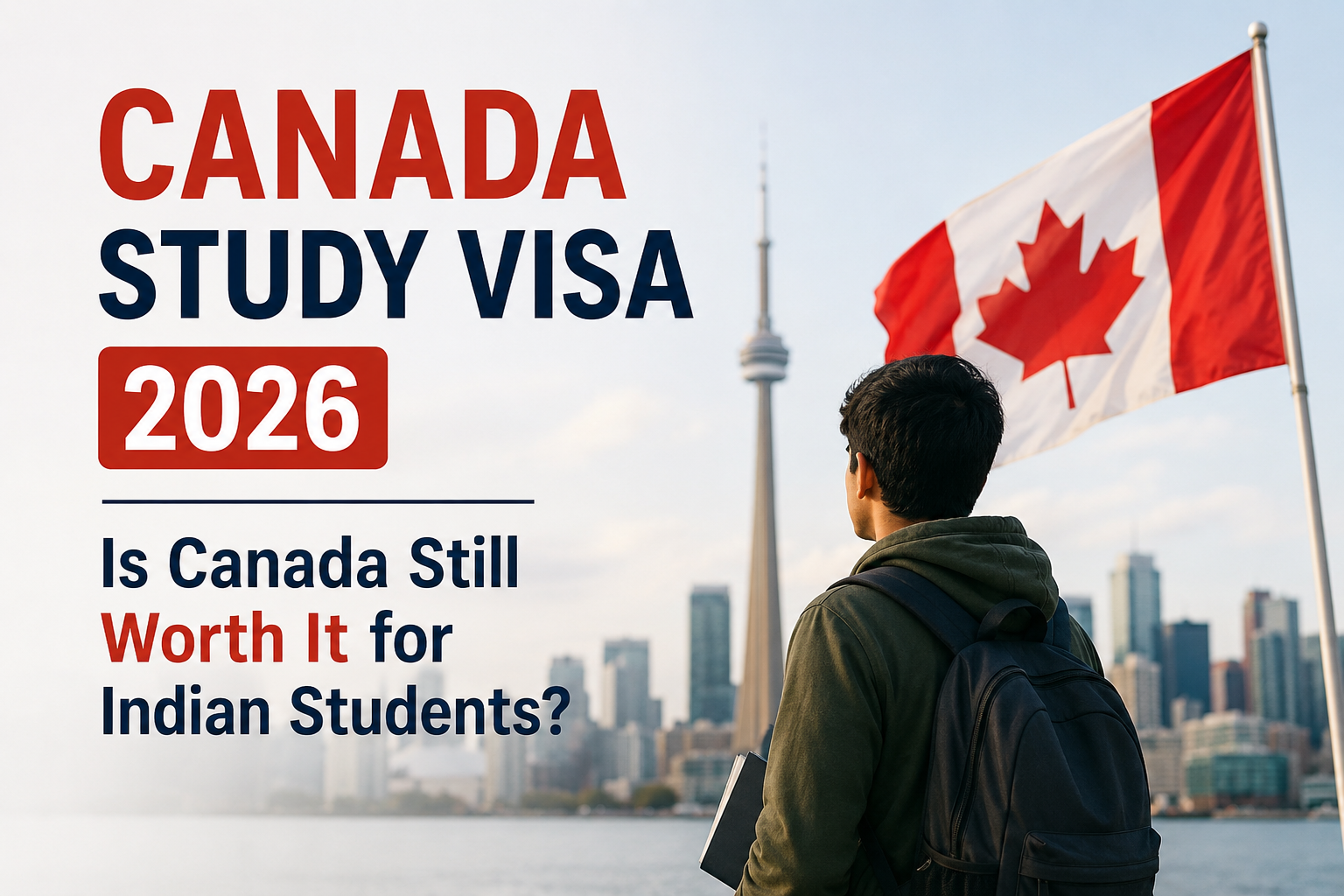
Canada Study Visa 2026: Is Canada Still Worth It for Indian Students?
Canada Study Visa 2026: Is Canada Still Worth It for Indian Students?
The narrative around Canada has changed. In 2023, it was widely seen as the easiest pathway for study, work and eventual migration. Fast forward to 2026, and that “golden era” is clearly over. In this new context, studying in Canada 2026 is no longer about ease of entry, but about making informed and purposeful choices.
So, is Canada still worth it in 2026? The answer is yes, but only for those making informed and strategic decisions. Canada is now prioritising applicants with academic relevance, financial preparedness and the ability to contribute to the labor market over time. This makes the process more selective, but also clearer in terms of what the country expects from international applicants. Rather than discouraging genuine candidates, these changes are creating a more structured pathway for individuals aligned with current economic and workforce needs.
2026 Policy Audit: What Has Actually Changed
Canada’s policy reset is real, and it directly impacts international students applying for a Canada study permit in 2026.
- No separate co-op work permit required (April 2026 update)
Study permits now include authorization for internships and co-op placements. This simplifies the process and reduces administrative delays. - 7% reduction in study permit targets
The government has capped intake to manage infrastructure pressure. Fewer approvals mean higher competition and stricter screening. - Provincial Attestation Letter (PAL) requirement continues
Most undergraduate applicants must secure a PAL from their province. This ties admissions to regional capacity and planning. - Provincial Attestation Letter (PAL) requirement continues
Most undergraduate applicants must secure a PAL from their province. This ties admissions directly to regional capacity and planning priorities. - Increased financial requirements
Students must now demonstrate stronger proof of funds to show they can manage tuition and living expenses in Canada’s rising-cost environment. - Work permit policy changes
Canada is tightening work and immigration pathways to prioritise graduates with in-demand skills, relevant education and long-term economic contribution potential.
Market Shifts Students Must Understand
- Rising tuition costs
Tuition fees across many Canadian institutions have continued to increase, especially for international students in STEM, healthcare and business programs.
- Housing crisis impact
Rental shortages and rising accommodation costs remain major concerns in cities such as Toronto and Vancouver, making affordability an important planning factor. - Job market saturation in certain fields
Generic programs, particularly in business and hospitality, are facing increased competition with weaker employment outcomes compared to healthcare, trades and technology sectors. - Immigration processing timelines
Higher application volumes and stricter verification processes can affect visa processing speed, making early preparation increasingly important.
This is not a shutdown. It is a filtration mechanism designed to prioritise students with clear academic goals, financial preparedness and strong labor market alignment.
The Real Cost: 2026 Numbers
Canada remains a premium destination and understanding the full cost is essential before making a decision.
- Proof of funds
Minimum CAD $22,895 (≈ INR 14 lakh), excluding tuition. This is a key visa requirement and must be clearly shown. - Tuition fees (annual)
- Colleges: INR 10-16 lakh
- Universities: INR 15-28 lakh
Costs vary by program, with STEM and healthcare on the higher side but better aligned with job outcomes.
- GIC (Guaranteed Investment Certificate) 2026
CAD $20,635 (≈ INR 12.5 lakh), released in parts after arrival to cover living expenses. - Living costs (monthly)
- GTA/GVA: INR 90,000 – 1.4 lakh
- Prairies: INR 60,000 – 90,000
Location plays a major role in overall expenses.
- Housing pressure
Rental demand remains high in major cities, making shared accommodation a common choice. - Additional costs
Health insurance, study materials and initial setup expenses can add to the budget.
The key point is simple. Total cost depends on planning, location, and course selection. With proper preparation, it remains manageable.
Canada Intakes and Application Timeline
Canada generally offers three major intakes for international students:
- Fall Intake (September), the primary intake with the highest number of program options and scholarships.
- Winter Intake (January), suitable for students who missed the Fall cycle.
- Summer Intake (May), available for selected programs and institutions.
For most students, the overall process, including university applications, PAL requirements, study permit approval and travel preparation, usually takes around 6 to 12 months. Early planning has become increasingly important in 2026 due to intake caps and stricter screening measures.
The PROS: Why It Still Makes Sense
Despite tighter rules, studying in Canada in 2026 continues to offer clear advantages, especially for students who choose carefully.
- High-value outcomes in STEM and Healthcare
Fields like AI, data science, nursing and allied health remain closely linked to real job demand, improving career stability after graduation. - Master's and PhD advantage
These students are PAL-exempt, which reduces one layer of approval and improves overall admission predictability. - Structured post-study work pathways
While PGWP changes have made eligibility more selective, programs aligned with labor needs still provide valid work opportunities after study. - Stable immigration system (with conditions)
Canada PR pathways now prioritise candidates with in-demand skills through category-based selection. Many international students complete an eligible program, gain Canadian work experience through PGWP and later apply through Express Entry or Provincial Nominee Programs (PNPs). Graduates in STEM, healthcare, trades and technology generally have stronger PR prospects in 2026. - Quality of education and global recognition
Canadian degrees are widely accepted and valued, which helps students access opportunities beyond Canada as well. - Safe and supportive environment
Canada continues to offer a welcoming environment with strong student support systems, which matters for long-term adjustment. - Part-time work flexibility
Students can work during studies, helping manage day-to-day expenses and gain initial work experience.
This is a system that rewards clear direction, relevant skills and informed decision-making.
The CONS: Real Challenges
The risks are real, especially for those making uninformed choices.
- The “Canadian Experience” barrier
Many employers prefer local work experience, making initial job entry challenging. - Rising international student costs
Tuition, rent and daily expenses have all increased, reducing financial flexibility. - Program-level risk
Generic courses like business administration or hospitality no longer guarantee outcomes without strong differentiation. - Housing pressure remains
Even with slight corrections in property prices, rental availability is still tight in major provinces.
This is where poor planning leads to weak returns.
2026 Policy Audit: What Has Actually Changed
Canada Then vs Canada Now
| Factor | 2023 Canada | 2026 Canada |
| Study Permits | Easier | More selective |
| PAL Requirement | New | Still active |
| Costs | Moderate | Higher |
| PR Pathway | Broad | Skill-focused |
| PGWP | Flexible | More targeted |
Who Should (and Shouldn't) Go
Choosing Canada in 2026 is less about the destination and more about how well your profile fits current demand. A clear alignment between your course and career path makes a significant difference.
Strong Fit
- STEM (AI, IT, Engineering)
- Healthcare (Nursing, Public Health, Clinical fields)
- Skilled Trades (Construction, Electrical, Mechanical)
These fields are directly linked to labor shortages, which improves job prospects and strengthens long-term opportunities. Students in these areas often find smoother transitions from study to work, especially when combined with internships or co-op experience.
Moderate Fit
- Finance, Analytics, Supply Chain
- Business programs with specialization
These can still work well, but outcomes depend heavily on the institution, location and practical exposure. Internships, certifications and networking play a key role here. Without them, competition can be higher.
High Risk
- Generic Business Administration
- Hospitality and Tourism
- Low-cost private college diplomas without industry linkage
These options may seem affordable initially but often lack clear job alignment. Without strong skills, specialization or relevant experience, students may face challenges in securing stable employment after graduation.
Pro Tip: 2026 Advantage Most Students Miss
Masters students are exempt from the Provincial Attestation Letter (PAL), which removes a key approval step and makes the admission process more predictable. For students with the right academic profile and budget, this pathway offers a clear advantage in 2026. It also improves approval confidence compared to undergraduate applications.
Conclusion
Canada is no longer an easy entry route but a more selective and high-value system focused on serious applicants. Students who choose relevant programs and prepare well can still achieve meaningful outcomes, while unclear or unfocused choices carry a higher risk. The focus has clearly shifted toward informed, well-planned decisions. If approached with clarity, studying in Canada in 2026 can still deliver long-term value, but the margin for error is smaller. Program choice, location and financial planning now play a critical role in shaping outcomes. Students who align with market demand, manage international student costs effectively, and adapt to evolving policies such as the Canada study permit 2026 framework continue to find Canada a viable and rewarding destination.
The question is no longer “Is Canada worth it?”
The real question is whether your profile matches the opportunities available.
Confused about whether Canada is the right fit for your profile? Our study abroad experts can help you choose the right course, province and university based on your career goals and budget. Contact Berakah Elite today for personalized Canada admission guidance for 2026.
FAQs
1. What is the minimum budget for Canada in 2026?
Expect a total investment of INR 45-60 lakhs depending on the program and location.
2. Is PR still possible after the study?
Yes, but through targeted Canada PR pathways based on skills, not general eligibility.
3. Which programs are best in 2026?
Healthcare, AI, engineering and trades offer the most reliable outcomes.

Recent updates

AI Is Changing University Admissions: How Students Can Build an Application That Still Stands Out
September 23 2026
Scholarships for Indian Students in 2026: Funding Opportunities You Should Know About
September 23 2026

Study Abroad Without the Big Four: Which Emerging Destinations Are Gaining Indian Students in 2026?
September 17 2026

Green Jobs Abroad in 2026: Which Degrees Can Lead to Careers in Renewable Energy, ESG & Climate Tech?
September 16 2026
Student Visa Rules in 2026: Latest Updates Every Indian Student Should Know
August 10 2026

Best Cities in New Zealand for Indian Students in 2026: Jobs, Rent, Student Life & Part-Time Opportunities
August 6 2026

AI-Proof Careers Abroad: Degrees That Will Stay Relevant Beyond 2030
July 13 2026

Global Talent Shortage Report 2026: Courses Leading to the Highest-Demand Jobs Abroad
July 11 2026

Study Abroad vs Skill-Based Migration: Which Route Offers Better Career Growth in 2026?
July 8 2026