July 4 2026
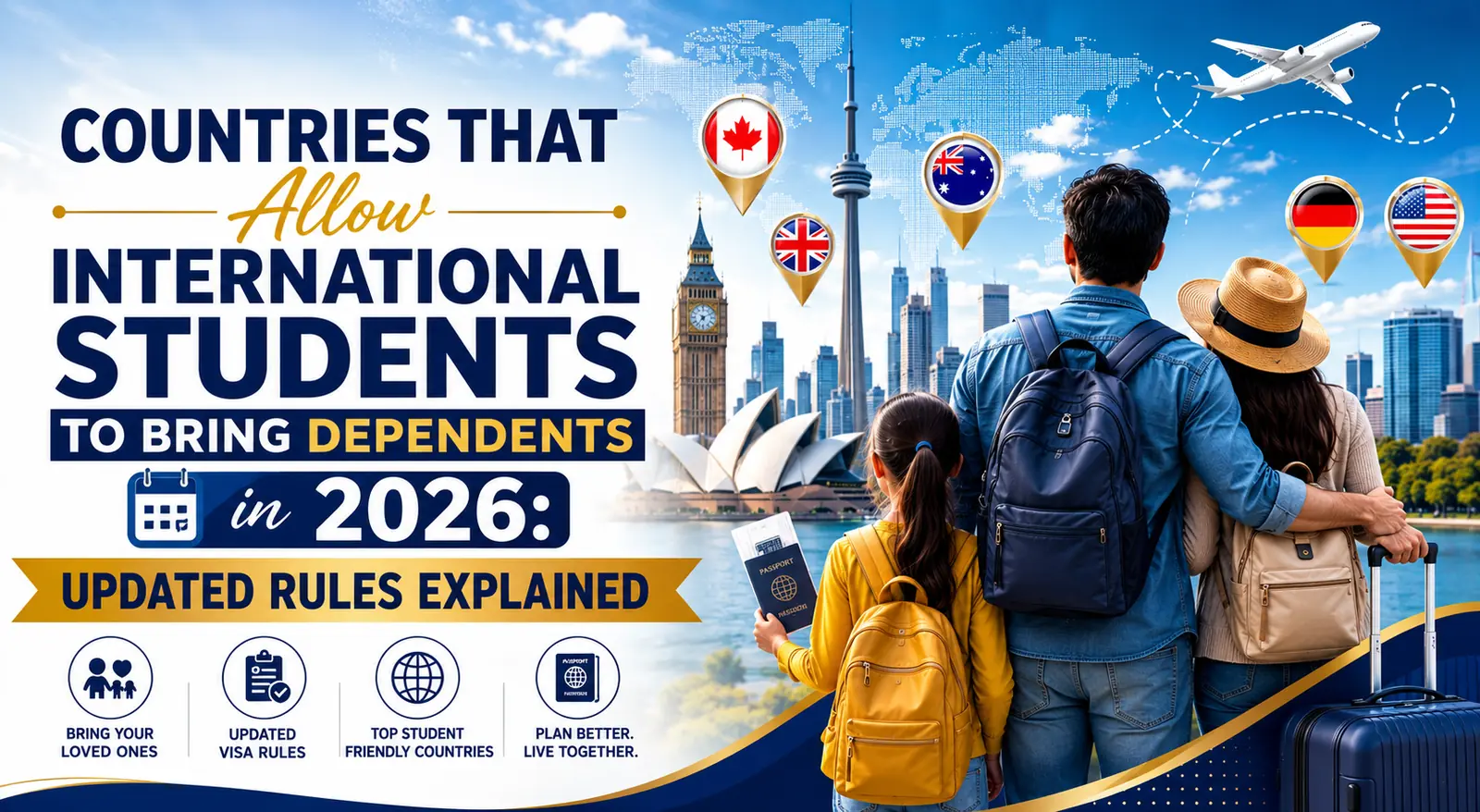
Countries That Allow International Students to Bring Dependents in 2026
Every year, thousands of Indian students choose to continue their education in universities abroad. But if you are married or have children, choosing a study destination involves more than finding the right university. You also need to know whether your family can accompany you during your studies. Several countries continue to offer dependent visas for international students, while others have introduced stricter rules in recent years. Understanding countries allowing international students to bring dependents before you apply can help you choose a destination that supports both your education and your family's future. This guide covers the latest 2026 dependent visa rules, including which countries allow spouses and children, spouse work rights, recent policy updates and the key factors to consider before making your decision.
Why Dependent Visa Rules Matter Before Choosing a Study Destination
If you are planning to study abroad with your family, choosing the right destination becomes even more important than choosing the right university. Living apart from your spouse or children for several years can be emotionally and financially challenging. Countries that offer dependent visas allow families to stay together while creating better opportunities for work, education and long-term settlement.
Before applying, consider factors such as:
- Whether your spouse is eligible for a dependent visa.
- If your spouse can work legally.
- Whether your children can attend public schools.
- Healthcare coverage for dependents.
- Proof of funds and living expenses.
- Future permanent residency opportunities.
Internal Link: https://www.gov.uk/student-visa/family-members
Understanding these factors can help you choose a destination that supports both your education and your family's future.
What Is a Student Dependent Visa?
A dependent visa for international students allows eligible family members to live with a student while they complete their studies abroad.
Depending on the country, eligible dependents may include:
- A legally married spouse
- A common-law or de facto partner (where recognized)
- Dependent children below the specified age limit
To qualify, immigration authorities generally require:
- A valid student visa
- Proof of admission to a recognized institution
- Marriage or birth certificates
- Proof of sufficient financial resources
- Health insurance where applicable
- Accommodation details
Each country has its own eligibility rules, so students should always review the latest immigration requirements before submitting their application.
How Long Does a Student Dependent Visa Take?
The processing time for a student dependent visa varies depending on the country, your country of residence, document verification and the number of applications being processed. In some destinations, a decision may take around 3 to 6 weeks, while others may take 2 to 4 months or longer, especially during peak intake seasons. Applying early and submitting complete documentation can help reduce delays. Always check the latest processing times on the official immigration website of your chosen destination before applying.
Health Insurance for Student Dependents
Many countries require international students and their dependents to have valid health insurance throughout their stay. Depending on your study destination, you may need to purchase government-approved health insurance or a university-recommended plan before your visa is approved. Having the right health cover not only helps meet visa requirements but also protects your family from unexpected medical expenses.
Check the Latest Student Dependent Visa Rules Before Applying
Dependent visa policies can change at any time. Before applying, always check the latest immigration rules for your chosen country including eligibility, financial requirements and required documents. Staying updated can help you avoid delays, reduce the risk of visa refusal and make your application process smoother.
*Disclaimer: Immigration regulations are subject to change, so always verify the latest requirements through the official immigration authority before applying.
Countries That Allow International Students to Bring Dependents in 2026
Several countries continue to support study abroad with family by offering dependent visa pathways for eligible international students. However, the rules vary depending on the course level, visa type and immigration policies.
Australia
Australia remains one of the best countries for married international students because of its well-established dependent visa framework.
Who is eligible?
Students enrolled in eligible higher education programs, including many Master's and PhD courses, can usually include their spouse and children in their visa application.
Benefits
- Eligible spouses can work while the student studies, with work rights depending on the student's course.
- Children can attend Australian schools, although tuition policies vary by state.
- Dependents usually receive visas for the same duration as the student's visa.
Things to Know
- Every family member must have an Overseas Student Health Cover (OSHC).
- Australia has increased its financial capacity requirements, so applicants must demonstrate higher living expenses for accompanying family members.
- Declaring dependents during the initial visa application is generally recommended to simplify processing.
Australia remains a popular destination for students seeking quality education while keeping their families together.
Official source: https://immi.homeaffairs.gov.au/
Germany
Germany is well known for affordable higher education and family-friendly immigration policies.
Who can bring dependents?
International students enrolled in recognized universities may apply for family reunification, provided they meet immigration requirements.
Benefits
- Spouses generally receive unrestricted work rights.
- Children have access to Germany's public education system.
- Public schooling is usually free, making Germany a cost-effective option for families.
Things to Know
- Students must demonstrate adequate financial support, often through a blocked account or equivalent proof.
- In some situations, spouses may need to demonstrate basic German language skills.
- Visa processing timelines can vary depending on the country of application.
Germany is one of the dependent visa countries for Indian students seeking affordable education and long-term career opportunities.
Official source : https://www.make-it-in-germany.com/en/
New Zealand
New Zealand offers dependent visa opportunities for eligible international students enrolled in postgraduate and selected skill-focused programs.
Eligible Programs
Dependent visas are commonly available for:
- Eligible postgraduate qualifications
- Approved Green List occupations
- Research-based programs
Benefits
- Partners may qualify for an open work visa.
- Children may be eligible for domestic student status, reducing school fees.
- Families benefit from New Zealand's safe and welcoming communities.
Things to Know
- Eligibility depends on both the qualification level and the field of study.
- Students must demonstrate sufficient financial resources to support their dependents.
New Zealand continues to attract students planning both higher education and long-term migration.
Official Source: https://www.immigration.govt.nz/
Ireland
Ireland has become a preferred destination for Indian students because of its growing economy and strong graduate employment opportunities.
Who can bring dependents?
Dependent visas are generally available for students pursuing:
- Master's by Research
- PhD programs
- Certain approved research courses
Benefits
- Eligible spouses may receive permission to work.
- Ireland offers excellent employment opportunities in technology, healthcare, finance and pharmaceutical sectors.
- Children may attend public schools under applicable regulations.
Things to Know
- Most taught Master's students are not eligible to bring dependents.
- Students should confirm eligibility before accepting admission.
Ireland is especially suitable for research students planning to establish their careers after graduation.
Official source: https://www.irishimmigration.ie/
Nordic Countries (Finland & Sweden)
Finland and Sweden are among Europe's most family-friendly destinations for international students.
Benefits
- Family residence permits are available for eligible students.
- Spouses generally have unrestricted work rights.
- Children can attend high-quality public schools.
- Families benefit from excellent healthcare and social welfare systems.
Things to Know
- Students must demonstrate adequate financial resources for every accompanying family member.
- Applying early helps reduce processing delays.
The Nordic countries are ideal for students considering long-term residence and future permanent settlement.
Official Source
Finland: https://migri.fi/en/home
Sweden: https://www.migrationsverket.se/
France
France offers family reunification pathways for eligible international students under its residence permit system.
Benefits
- Eligible spouses and children can obtain residence permits.
- Families may access France's public healthcare system after meeting eligibility requirements.
- Children have access to public education.
Things to Know
- Processing timelines vary depending on the visa category.
- Complete documentation is essential to avoid unnecessary delays.
France combines quality education, cultural diversity and family-friendly public services.
Official Source: https://france-visas.gouv.fr/
Countries That Have Recently Tightened Dependent Visa Rules
While many countries continue to welcome student families, others have introduced stricter policies to manage international student migration.
United Kingdom (UK)
The UK has significantly changed its international student dependent visa rules.
Students enrolled in most taught Master's programs are no longer eligible to bring dependents.
Exceptions
Dependents remain eligible for:
- PhD students
- Postgraduate research programs
- Certain government-sponsored students
Students planning to study abroad with a spouse should carefully check whether their course qualifies before applying.
Official source: https://www.gov.uk/
Canada
Canada has also updated its student dependent visa 2026 policies.
Spouse Open Work Permits (SOWPs) are now generally limited to spouses of students enrolled in:
- Master's programs lasting at least 16 months
- Doctoral programs
- Selected professional degree programs
Dependent children can still accompany eligible students under the appropriate visa category. Students considering Canada should review the latest eligibility criteria carefully, as the rules now depend on both the level and duration of the academic program.
Official source: https://www.canada.ca/en/services/immigration-citizenship.html
2026 Quick Comparison Table
| Country | Spouse Allowed | Children Allowed | Spouse Can Work | Best For |
| Australia | Yes(Eligible programs) | Yes | Yes | Research and career growth |
| Germany | Yes | Yes | Yes | Affordable higher education |
| New Zealand | Yes(Eligible programs) | Yes | Yes | Skilled migration pathways |
| Ireland | Yes | Yes | Yes | Technology and research career |
| Finland | Yes | Yes | Yes | Family-friendly living |
| Sweden | Yes | Yes | Yes | Long-term settlement |
| France | Yes | Yes | Limited by permit | European education |
| UK | Mostly research students | Limited eligibility | Depends on visa | PhD and research |
| Canada | Restricted eligibility | Yes | Restricted eligibility | Professional and doctoral studies |
Documents Required for Student Dependent Visa Applications
While the required documents may vary by country, most student dependent visa applications require the following:
- Valid passport
- Marriage certificate (for spouse)
- Birth certificate (for dependent children)
- University admission letter or Confirmation of Enrolment (CoE)
- Copy of the student's visa
- Proof of sufficient funds
- Valid health insurance
- Accommodation proof
- Medical certificates (if applicable)
- Completed visa application forms
Preparing these documents in advance can help speed up the application process and reduce the risk of delays.
Tips Before Applying with Dependents
Applying for a dependent visa for international students requires careful planning. Keep these tips in mind before submitting your application:
- Check the latest immigration and visa updates for your chosen country.
- Calculate tuition fees and living expenses for your family.
- Arrange suitable accommodation before travelling.
- Purchase the required health insurance for all dependents.
- Prepare all supporting documents carefully.
- Apply as early as possible to avoid processing delays.
- Consult an experienced study abroad consultant for expert guidance.
Common Mistakes Students Make
Many students experience visa delays or even application refusals because of avoidable mistakes. Before submitting your application, watch out for these common errors:
- Assuming every country has the same dependent visa rules.
- Underestimating the proof of funds required to support accompanying family members.
- Applying for programmes that do not permit dependents.
- Missing required documents or submitting incomplete applications.
- Failing to check whether a spouse is eligible to work under the visa conditions.
- Waiting until the last minute to submit the visa application.
How to Avoid These Mistakes
Careful planning can make your dependent visa application process much smoother. Before applying, review the latest immigration policies for your chosen country to confirm eligibility and visa conditions. Check the official financial requirements and prepare supporting documents well in advance. Verify that your chosen programme allows family members and understand the work rights available to your spouse, if applicable. Finally, create a document checklist and submit your application early to reduce the risk of delays during peak intake periods.
Conclusion
Choosing countries allowing international students to bring dependents is about more than university rankings or tuition fees. If you plan to study abroad with your spouse or children, dependent visa policies should play a key role in your decision. Since immigration regulations continue to evolve, staying informed and seeking professional guidance can help you avoid unnecessary challenges during the application process. With careful planning, you can pursue your education while keeping your family together throughout your international study journey. Planning to study abroad with your family? Berakah Elite provides expert guidance on choosing the right country, securing university admissions and navigating the dependent visa application process with assurance.
Frequently Asked Questions
- Can international students bring their spouses in 2026?
Yes. Many countries, including Australia, Germany, New Zealand, Finland, Sweden and France, allow eligible international students to bring their spouse. Eligibility depends on the country and the student's programme.
- Which countries allow student dependents in 2026?
Australia, Germany, New Zealand, Ireland, Finland, Sweden and France continue to offer dependent visa pathways for eligible students. Canada and the UK have introduced stricter eligibility requirements.
- Can my spouse work while I study abroad?
In many countries, eligible spouses can work while the student studies. Work rights vary depending on the country's immigration rules and the student's course.
- Can international students take their children abroad?
Yes. Many countries allow international students to bring dependent children, who may also be eligible to attend public schools.
- Has Canada changed its dependent visa rules?
Yes. Canada has restricted Spouse Open Work Permit eligibility, mainly to spouses of students enrolled in eligible Master's, doctoral and selected professional degree programmes.
- Can Master's students take dependents to the UK?
In most cases, students enrolled in taught Master's programmes cannot bring dependents. Exceptions mainly apply to postgraduate research and PhD students.
- Which country is best for studying abroad with family?
Australia, Germany, New Zealand, Finland and Sweden are among the most family-friendly destinations because they offer dependent visa options, spouse work rights and quality public services.
- How much money is required to sponsor dependents?
The required amount varies by country and depends on factors such as the number of dependents, tuition fees and living expenses. Applicants should always check the latest financial requirements set by the immigration authority of their chosen destination.

Recent updates

AI Is Changing University Admissions: How Students Can Build an Application That Still Stands Out
September 23 2026
Scholarships for Indian Students in 2026: Funding Opportunities You Should Know About
September 23 2026
Study Abroad Without the Big Four: Which Emerging Destinations Are Gaining Indian Students in 2026?
September 17 2026

Green Jobs Abroad in 2026: Which Degrees Can Lead to Careers in Renewable Energy, ESG & Climate Tech?
September 16 2026
Student Visa Rules in 2026: Latest Updates Every Indian Student Should Know
August 10 2026

Best Cities in New Zealand for Indian Students in 2026: Jobs, Rent, Student Life & Part-Time Opportunities
August 6 2026
AI-Proof Careers Abroad: Degrees That Will Stay Relevant Beyond 2030
July 13 2026
Global Talent Shortage Report 2026: Courses Leading to the Highest-Demand Jobs Abroad
July 11 2026
Study Abroad vs Skill-Based Migration: Which Route Offers Better Career Growth in 2026?
July 8 2026