December 12 2025
10 Foreign Languages to Learn: German, French, Japanese & others
Pursuing the best foreign languages to learn is more than a skill-it's an investment in cognitive growth, cultural understanding, and career opportunities. In 2026, global students are increasingly choosing languages that widen both academic and professional horizons. Multilingual individuals enjoy higher problem-solving capabilities, better brain development, and even stronger employability across the globe. About 43% of the world's population speaks more than one language, further revealing the growing importance of linguistic skills. Whether for travel, study abroad, or career development, knowing a foreign language opens up doors all over the world. In this piece, we consider the trending foreign languages to learn and how to choose the right one for yourself.
Why Learning a Foreign Language Matters
It boosts cognitive development, strengthens multilingual skills, and enhances brain growth. It provides an academic advantage and improves international communication. Language learning fosters cultural intelligence that enables tourists to get in touch with local traditions. Multilingualism improves career advancement opportunities and makes networking across borders easier. Students with additional language skills feel more competitive in global job markets and enjoy deeper cultural immersion when traveling.
Cognitive Benefits of Learning a Language
- Improving memory: Multilingual learners retain information more effectively.
- Problem-solving skills: Grammar and vocabulary learning enhance analytical thinking.
- Multitasking: Switching between languages enhances mental flexibility.
- Creative thinking: Exposure to new linguistic structures inspires creativity.
- Grey matter growth: Bilingual brains exhibit greater grey matter density.
Academic and Career Advantages
- Scholarships: Multilingual skills increase eligibility for international scholarships.
- University admissions: The highest-ranked universities place a strong emphasis on foreign language proficiency.
- Global employability: Many international companies favor bilingual people.
- Resume enhancement: Language skills improve competitiveness.
- Competitive advantage: International experience plus language skills boost career growth.
Cultural Immersion and Travel Opportunities
- Local traditions: Language knowledge allows deeper engagement with cultural festivals.
- Cultural fluency: To understand history, arts, and social customs.
- Tourism: Navigate more efficiently and create meaningful travel experiences.
- Networking with locals: Connect easily abroad.
- Tourism of languages: Travel to learn a new language.
How to Choose the Right Language
Choosing the right language requires considering difficulty, career goals, and personal interests. Study abroad options and travel plans play a major role. Using language learning apps or connecting with native speakers gives an idea of your interest in a language. Certificates of proficiency are valuable for both academic and career purposes. When your choice of language aligns with future goals, motivation is easier to maintain.
Studying the best foreign languages to learn should balance personal interest with practical benefits, ensuring long-term engagement.
Aligning Language with Career Goals
- Global jobs: Consider languages valuable in tech, business, arts, and diplomacy.
- Industry relevance: Concentrate on the languages relevant for your professional life.
Aligning Language with Academic Plans
- Top universities: choose languages that promote study abroad opportunities
- International courses: Language may be the key to scholarships and programs.
Passion for Culture and Personal Interest
- Cultural Immersion: Interest in media, arts, and cuisine guides language choice.
- Hobbies: Personal passion leads to continuous learning motivation.
10 Foreign Languages Comparison Table
If you’re a student planning to study abroad or boost your career, this table highlights the top foreign languages for students based on native speakers, career use, study abroad destinations, and popular proficiency exams.
| Language | Native Speakers | Career Use | Study Abroad | Popular Exam |
|---|---|---|---|---|
| German | 95M | Engineering, Business | Germany, Austria | Goethe-Zertifikat |
| French | 80M | Diplomacy, Fashion | France, Canada | DELF/DALF |
| Japanese | 128M | Tech, Media | Japan | JLPT |
| Russian | 150M | Politics, Medicine | Russia | TRKI |
| Korean | 77M | Tech, K-Pop | South Korea | TOPIK |
| Italian | 67M | Arts, Fashion | Italy | CILS |
| Spanish | 480M | Business, Tourism | Spain, Latin America | DELE |
| Arabic | 310M | Trade, Diplomacy | Middle East | ALPT |
| Mandarin | 1B+ | Trade, Politics | China | HSK |
| Portuguese | 230M | Trade, Tourism | Brazil, Portugal | CELPE-Bras |
Detailed Guide on 10 Foreign Languages
Before diving into individual languages, it’s helpful to explore a list of the 10 foreign languages to learn that offer the most academic, cultural, and career advantages. This guide will help you choose the language that best fits your goals and interests.
German Overview
- Native speakers: 95M in Germany, Austria, Switzerland
- Writing system and grammar: Latin alphabet, with cases and gendered nouns
- Language family: Indo-European, Germanic
Why Learn German?
High demand in engineering, science, and EU business; explore literature, philosophy, and arts; certification via Goethe-Zertifikat enhances career prospects.
How to Learn German Effectively
Use Duolingo, Babbel, or Memrise; immerse in Germany, or practice with native speakers every day.
French Overview
- Native speakers: 80M across France, Canada, Switzerland
- Writing system & grammar: Latin alphabet, gendered nouns, verb conjugations
- Language family: Romance
Why Learn French?
Valuable in diplomacy, fashion, and arts, cultural exposure through cinema and literature helps increase global awareness.
How to Learn French Effectively
Use Duolingo, Memrise, or Babbel; study in France or join language exchanges; DELF/DALF certification adds credibility.
Japanese Overview
- Native speakers: 128M in Japan
- Writing system & grammar: Kanji, Hiragana, Katakana; SOV order
- Language family: Japonic
Why Learn Japanese?
Outstanding career prospects in technology, media, and business; a truly immersive cultural experience embraces both traditional arts and pop culture.
How to Learn Japanese Effectively
Apps like WaniKani and Duolingo; studying in Japan or practicing with native speakers; JLPT exams to prove proficiency.
Russian Overview
- Native speakers: 150M in Russia and neighboring countries
- Writing system & grammar: Cyrillic alphabet, cases, gendered nouns
Language family: Slavic
Why Learn Russian?
Careers in politics, medicine, Eurasian trade; rich literature and classical arts; study in Russian universities.
How to Learn Russian Effectively
Use Duolingo or Babbel; immersion programs and language partners; TRKI certification of proficiency.
Korean Overview
- Native speakers: 77M in South and North Korea
- Writing system & grammar: Hangul, honorifics, SOV order
- Language family: Koreanic
Why Learn Korean?
Tech, entertainment, and international business careers; K-pop and media influence; study in South Korea.
How to Learn Korean Effectively
Use Talk To Me In Korean, Duolingo, and Memrise. Practice with native speakers. Take TOPIK exams for certification.
Italian Overview
- Native speakers: 67M in Italy & Switzerland
- Writing system & grammar: Latin alphabet, gendered nouns, verb conjugations
- Language family: Romance
Why Learn Italian?
Careers in Arts, Fashion, and Culinary; Rich Cultural Heritage: Students can study in Italy and enjoy Opera, Literature, and Cuisine.
How to Learn Italian Effectively
Use Duolingo, Babbel, Memrise; immersion programs in Italy; CILS exams for proficiency.
Spanish Overview
- Native speakers: 480M in Spain, Latin America, USA
- Writing system & grammar: Latin alphabet, gendered nouns, accent marks
- Language family: Romance
Why Learn Spanish?
Opportunities in tourism, business, and media; cultural exposure to music, dance, and literature.
How to Learn Spanish Effectively
Duolingo, Babbel, Memrise; study abroad, language exchanges; DELE exams to get certified.
Arabic Overview
- Native speakers: 310M in Middle East & North Africa
- Writing system & grammar: Arabic script, right-to-left, root-based morphology
- Language family: Semitic
Why Learn Arabic?
Careers in trade, diplomacy, business; access to cultural heritage; study abroad in Arabic-speaking countries.
How to Learn Arabic Effectively
Duolingo, Babbel, and Memrise; immersion programs; practice reading, writing, and speaking. ALPT certification
Mandarin Chinese Overview
- Native speakers: 1B+ in China, Taiwan, Singapore
- Writing system & grammar: Chinese characters, tonal, SVO order
- Language family: Sino-Tibetan
Why Learn Mandarin Chinese?
Essential to global trade, politics, and business; cultural exposure to festivals and food; study in China.
How to Learn Mandarin Chinese Effectively
Using Duolingo, HelloChinese, and Memrise; immersion with language partners, taking HSK exams for certification.
Portuguese Overview
- Native speakers: 230M in Brazil, Portugal, Africa
- Writing system & grammar: Latin alphabet, gendered nouns, verb conjugations
- Language family: Romance
Why Learn Portuguese?
Trade, tourism, and international business careers; cultural exposure to music and cuisine. Study in Brazil or Portugal.
How to Learn Portuguese Effectively
Duolingo, Babbel, and Memrise; immersion in countries of native speech; CELPE-Bras certification regarding proficiency.
Tips and Strategies for Learning Any Foreign Language
Learning a foreign language effectively requires a combination of structured practice, consistent exposure, and strategic use of resources. By following key strategies, beginners can build vocabulary, strengthen grammar, and gradually develop speaking and writing skills while tracking progress through proficiency tests.
Start with Basics and Vocabulary
Focus on flashcards, common phrases, pronunciation, and grammar essentials to create a strong foundation for your language learning journey.
Use Technology and Apps
Leverage Duolingo, Memrise, Babbel, online tutoring, and YouTube lessons to practice daily and reinforce learning in an interactive way.
Immerse Yourself in Media and Culture
Engage with movies, music, podcasts, TV shows, and online communities to gain cultural exposure and reinforce comprehension in real-life contexts.
Practice Speaking and Writing Regularly
Work with language partners, participate in forums or conversation clubs, and maintain daily journaling to improve fluency and confidence.
Take Proficiency Tests
Prepare for DELF, DALF, JLPT, TOPIK, or Goethe-Zertifikat exams, as official certification supports study abroad requirements and enhances career credibility.
Sample Weekly Learning Plan
- Monday: 30 minutes of flashcards + 30 minutes of Duolingo practice
- Tuesday: 1 hour of grammar exercises + watch a short TV show in the target language
- Wednesday: 30 minutes of speaking practice with a language partner + 30 minutes of vocabulary review
- Thursday: 1 hour of listening practice via podcasts or music + journaling 100 words
- Friday: 30 minutes of reading exercises + 30 minutes of app-based practice
- Saturday: Participate in conversation clubs or online forums for 1 hour
- Sunday: Review weekly progress, revise vocabulary, and practice speaking and writing
Common FAQs About Learning Foreign Languages
- Which foreign language is easiest for beginners?
Spanish and Italian are generally easiest due to simple grammar and Latin-based scripts. - How long does it take to become fluent?
Fluency usually takes 6 months to 3 years depending on the language and learning intensity. - Does learning a foreign language boost career opportunities?
Yes, multilingual skills significantly enhance employability and global career prospects. - What are the best online resources and apps?
Duolingo, Memrise, Babbel, and language-specific apps like JLPT or TOPIK prep are highly effective. - Can I study abroad without knowing the local language?
Yes, many programs offer courses in English, but knowing the local language improves cultural immersion and daily life. - Which language has the highest global demand?
Mandarin Chinese, Spanish, and English remain the most in-demand globally for business and trade.
Conclusion: Investing in Languages for Your Future
Investing time in learning the best foreign languages to learn equips students with multilingual skills and enhances cultural intelligence, boosting their global employability. Mastering foreign languages to learn opens doors to international education, enriching both personal and professional experiences. Exploring the most strategic languages for students ensures learners focus on languages that offer the most academic and career advantages. Students who dedicate themselves to language learning gain a significant edge in study abroad programs and global networking opportunities. Study abroad consultants in Ernakulam like Berakahelite can help you choose the right languages, programs, and universities tailored to your goals.
Get in Touch with Berakah Elite today to start your journey toward global success and unlock endless opportunities worldwide.

Recent updates

AI Is Changing University Admissions: How Students Can Build an Application That Still Stands Out
September 23 2026
Scholarships for Indian Students in 2026: Funding Opportunities You Should Know About
September 23 2026
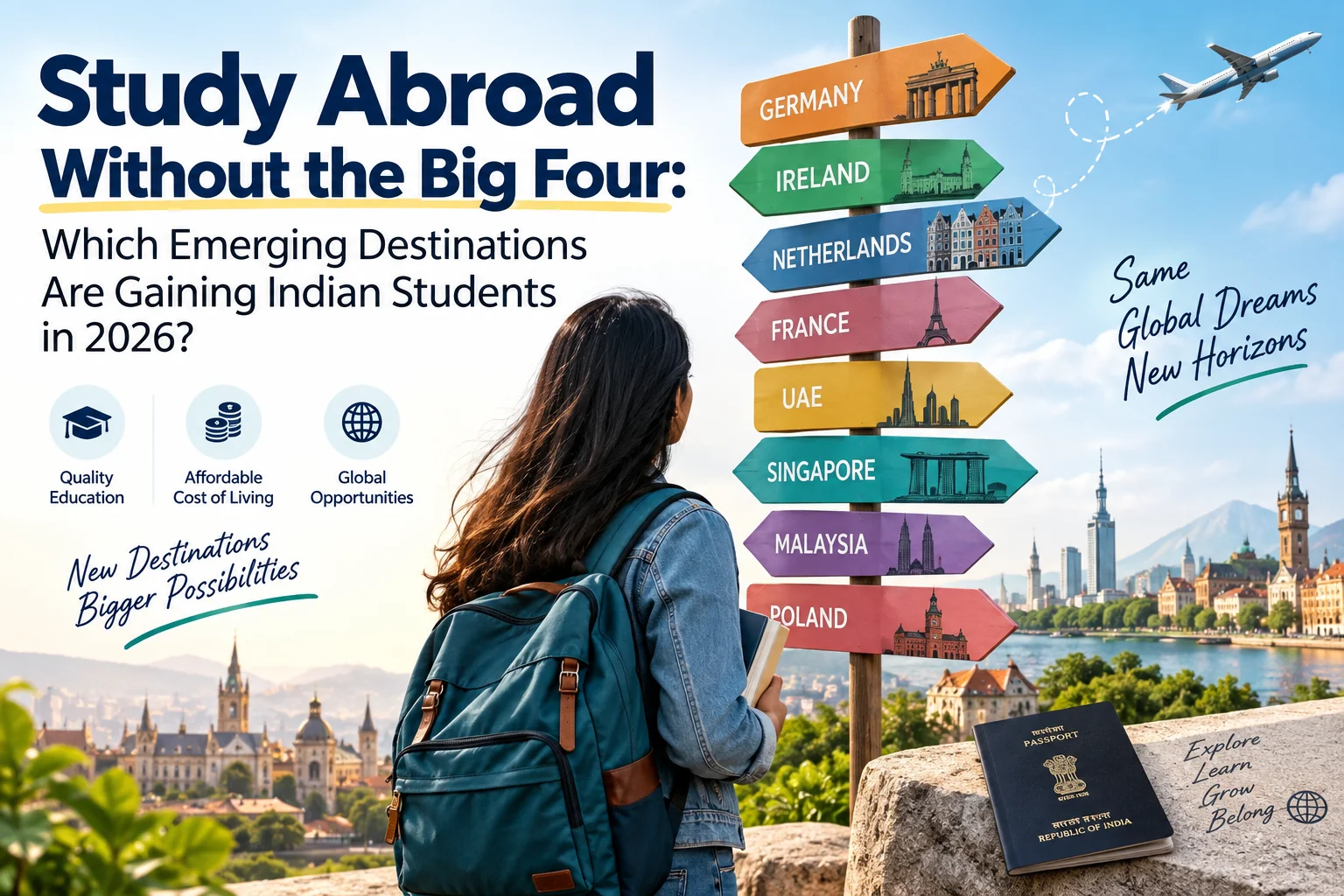
Study Abroad Without the Big Four: Which Emerging Destinations Are Gaining Indian Students in 2026?
September 17 2026

Green Jobs Abroad in 2026: Which Degrees Can Lead to Careers in Renewable Energy, ESG & Climate Tech?
September 16 2026
Student Visa Rules in 2026: Latest Updates Every Indian Student Should Know
August 10 2026

Best Cities in New Zealand for Indian Students in 2026: Jobs, Rent, Student Life & Part-Time Opportunities
August 6 2026

AI-Proof Careers Abroad: Degrees That Will Stay Relevant Beyond 2030
July 13 2026

Global Talent Shortage Report 2026: Courses Leading to the Highest-Demand Jobs Abroad
July 11 2026

Study Abroad vs Skill-Based Migration: Which Route Offers Better Career Growth in 2026?
July 8 2026