February 7 2026
Understanding How Visa Policy Updates Influence International Students
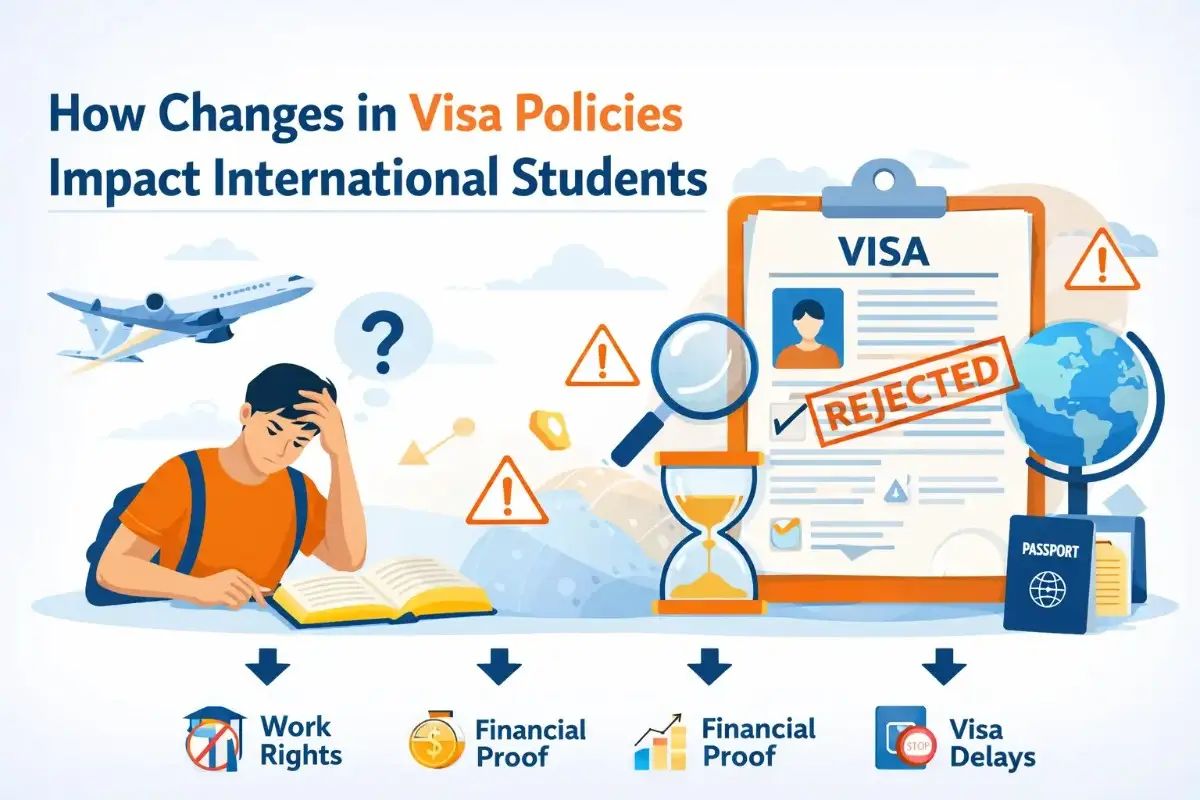
How changes in visa policies impact International students has emerged as a defining factor in international education as governments tighten immigration frameworks worldwide. The growing impact of visa changes on study abroad is evident in shifting eligibility rules, stricter immigration compliance, and faster regulatory updates that influence global mobility patterns. Visa rules now change more frequently, requiring students to adapt their study abroad planning with greater precision. For 2026–2027 intakes, understanding these policy movements is essential for managing risk, aligning academic goals, and navigating increasingly regulated international education pathways.
Why Visa Policies Change Frequently
Visa policies are revised to balance student inflow with economic capacity, labour demand, and regulatory oversight. In our findings, governments increasingly rely on adaptive frameworks rather than fixed rules. This approach allows authorities to manage migration responsibly while maintaining education quality and institutional credibility across international education systems.
Political & Economic Factors
Shifts in government priorities influence migration intake based on public spending, housing capacity, and employment conditions. International education remains economically valuable, yet visa volumes adjust when domestic fiscal pressure or political accountability increases.
Labour Market Protection
Student visa frameworks now align closely with labour absorption capacity. Migration control strategies prioritise employability relevance, ensuring graduates transition into sectors experiencing skills demand rather than contributing to underemployment pressures.
Fraud Prevention & Compliance
Authorities intensify scrutiny to reduce misuse and non-genuine applications. Visa integrity measures strengthen trust between institutions and regulators, using verification systems to confirm academic intent, financial credibility, and compliance history.
National Security & Public Health
Health screening and security checks expanded following global disruptions and remain embedded in entry frameworks. These measures aim to safeguard public systems while allowing controlled international student mobility.
Key Areas Where Visa Policy Changes Affect Students
Understanding how visa policy changes affect study abroad helps students prepare for eligibility shifts, financial proof updates, processing delays, work rights changes, and post-study planning with reduced risk and greater clarity.
1. Visa Eligibility Criteria
Eligibility revisions affect financial proof, language proficiency, academic progression, and age limits. Proof of funds benchmarks, IELTS/PTE requirement thresholds, and Genuine Student evaluations now receive greater attention during assessment to confirm intent alignment.
2. Documentation & Compliance Burden
Compliance requirements increase through verification layers, biometric submissions, and digital platforms. Systems such as PRISMS, SEVIS, and UKVI require precise consistency across academic, financial, and personal records to avoid delays or refusals.
3. Processing Time & Delays
Processing timelines fluctuate due to seasonal surges and regulatory transitions. Student visa backlog patterns indicate extended waits, while visa processing time 2026 projections highlight selective review models and limited embassy interview slots.
4. Tuition Fee & Financial Planning Impact
Financial thresholds now reflect rising living expenses across destinations. International student cost increase trends influence budgeting accuracy, with higher financial capacity requirement benchmarks and stricter student visa financial proof expectations.
5. Post-Study Work Rights
Post-study work policies change in response to labour needs. Graduate Route UK, PGWP Canada, and Temporary Graduate Visa Australia adjustments influence employment timelines and skilled migration planning.
6. Dependent & Family Visa Restrictions
Family inclusion rules have narrowed in several destinations. Updates affecting spouse work rights and child visa eligibility require students to reassess relocation feasibility and long-term financial planning.
7. Travel & Entry Restrictions
Entry requirements extend beyond visa issuance through travel authorisations and health checks. Border compliance plays a critical role in final admission clearance, particularly during high-risk assessment periods.
Country-Wise Analysis of Recent Student Visa Changes (2025–2026)
Different destinations respond uniquely to enrolment demand and compliance risk. In our experience, country-level comparison helps students evaluate regulatory stability, financial feasibility, and post-study opportunities before committing to a destination.
USA – F1 Visa & OPT Updates
The US updated F1 compliance rules and OPT guidelines, tightening reporting, employer requirements, and post-study work clarity, increasing scrutiny for international graduates.
UK – Dependent Ban & Financial Thresholds
The UK introduced stricter dependent rules and higher financial thresholds, limiting family support options and demanding stronger proof of funds for student visas.
Canada – Study Permit Caps & PGWP Changes
Canada implemented study permit caps and revised PGWP eligibility, impacting intake planning, post-study work duration, and long-term migration strategies for students.
Australia – Assessment Levels & GS Requirements
Australia updated assessment levels and Genuine Student requirements, intensifying checks on financial capacity, academic intent, and institutional compliance for visa approval.
Germany – Blocked Account Updates
Germany adjusted blocked account requirements, increasing minimum deposits and documentation standards, affecting students’ financial preparation and visa readiness.
Ireland & New Zealand Updates
Ireland and New Zealand revised student visa rules, focusing on work rights, documentation standards, and processing timelines, reflecting changing immigration and labor priorities
Comparison Table: Student Visa Rules by Country
| Country | Financial Proof | Work Rights | Dependents | Processing Risk |
|---|---|---|---|---|
| USA | Medium | Limited | Restricted | Medium |
| UK | High | Moderate | Restricted | Medium |
| Canada | High | Strong | Limited | Medium |
| Australia | High | Moderate | Limited | Medium |
| Germany | High | Moderate | Allowed | Low |
How Visa Changes Impact Students at Different Stages
Visa policy changes affect students differently at each stage of their journey, from choosing where and what to study to building careers abroad. Understanding these stage-specific impacts helps students plan proactively, reduce risk, and make informed decisions despite shifting immigration rules across countries and timelines in an evolving global environment.
Before Application (Course & Country Selection)
Before applying, visa changes influence course demand, country attractiveness, intake caps, and post-study rights. Students must assess policy stability, work allowances, financial thresholds, and long-term migration options early, ensuring chosen programs align with evolving visa frameworks and future career goals.
During Application (Documentation & Timeline)
During the application stage, shifting visa rules affect documentation requirements, proof of funds, language scores, and processing times. Delays or sudden updates can disrupt timelines, so students should track announcements closely, prepare buffers, and submit compliant applications to avoid refusals.
After Admission (Visa Approval Risks)
After admission, visa approval becomes the critical risk point. Policy tightening, higher rejection rates, interview scrutiny, or background checks can impact outcomes. Even with offers secured, students must meet final conditions precisely and remain adaptable to last-minute rule changes globally.
After Graduation (Employment & PR Pathways)
After graduation, visa changes shape employment prospects, post-study work duration, sponsorship rules, and permanent residency pathways. The new regulations create job duplication between two types of visas through their stringent requirements for staying in the country. Graduates need to develop their career plans according to two main factors which include existing labor shortages and current immigration rules.
Psychological & Emotional Impact on International Students
- Uncertainty stress: Constant changes in visa rules create ongoing worry and fear, increasing student visa stress and making it difficult to plan for the future.
- Financial anxiety: Rising fees, blocked work rights, and sudden policy shifts add pressure, causing students to worry about affordability and financial stability.
- Academic disruption: Stress and uncertainty often affect concentration, motivation, and performance, leading to missed deadlines or declining grades.
- Migration uncertainty: Unclear post-study options and shifting pathways heighten anxiety, making international student challenges feel overwhelming and long-term planning difficult.
How Students Can Strategically Adapt to Visa Policy Changes
Visa policies change quickly, but students can respond with smart planning rather than panic. A proactive, well-informed student visa success strategy helps reduce risk, improve approval chances, and maintain immigration compliance. These visa planning tips focus on preparation, flexibility, and professional guidance at every stage of their global education journey.
Start Early & Track Official Updates
Students who begin their work before the official start time can develop better skills to handle upcoming policy changes while they complete their document needs and program their work schedule. The system needs official government sources to operate correctly because it uses those sources to verify information and maintain compliance with immigration requirements and to help students manage international changes to rules and deadlines and financial limits and procedural modifications.
Choose Lower-Risk Institutions
Selecting lower-risk institutions improves visa outcomes by reducing scrutiny linked to compliance history. Accredited universities with strong approval rates, transparent admissions, and stable intake policies need to follow student visa success strategy because it helps them decrease refusals and assessment process uncertainty that happens during international evaluation.
Strengthen Financial Documentation
Financial documentation requirements become essential when companies reach higher financial standards and their operational checks become more rigorous. Students must provide proof of their financial resources and income sources and payment abilities which needs to be consistent across their different application documents. This process helps to reduce visa pressure while preventing delays and establishing trust with decision makers who conduct more thorough evaluations of their cases.
Have Backup Country Options
Having backup country options protects students from sudden migration uncertainty or policy tightening. Parallel applications diversify risk, preserve academic timelines, and improve leverage. Flexible destination planning remains a core visa planning tip in an unpredictable global immigration environment today worldwide.
Avoid Last-Minute Applications
Last-minute applications should be avoided because they create multiple errors which lead to higher refusal rates and increased stress levels. Early submissions provide sufficient time for necessary corrections because applicants will have time to complete interviews and reapply in case of rule modifications. The method ensures immigration compliance checklist requirements are met while safeguarding students from unexpected processing delays and document problems that occur during peak intake periods.
Work with Certified Consultants
Working with certified consultants provides clarity amid complex visa changes. Licensed experts interpret regulations, align profiles strategically, and prevent costly mistakes. Professional guidance strengthens student visa success strategy, improves approval confidence, and ensures ethical, compliant application processes across countries worldwide.
How Universities & Governments Respond to Visa Tightening
The International Education Association whose members work at different educational institutions and government agencies joins together with other organizations to advocate for their sector when visa regulations become stricter. The Departments of Education use OECD international student data because international education creates economic benefits for their operations to evaluate its effects. The combination of persistent pressure with reduced student enrollment and skilled worker deficiencies has led to policy changes which either restored previous policies or introduced newer regulations to safeguard institutional funding and workforce needs as well as international standing while enforcing immigration laws.
Common Study Abroad Visa Challenges
Many visa applications fail not because students lack eligibility, but due to common avoidable mistakes. Documentation mismatch, such as inconsistent or missing certificates, often raises doubts. Insufficient financial proof and unclear fund sources are frequent rejection reasons. An inconsistent SOP can undermine intent, while poor interview preparation increases failure risk. Additionally, policy misinterpretation, relying on outdated or incorrect rules, can lead to incorrect submissions. These challenges highlight the need for careful planning, thorough verification, and accurate guidance to improve approval chances.
Frequently Asked Questions (FAQ Schema Section)
- How do visa policy changes affect international students?
Visa policy changes can impact study choices, application timelines, financial requirements, and post-study work options, increasing uncertainty and planning complexity. - Are student visa rules becoming stricter in 2026?
Some countries are tightening rules while others remain stable or ease policies, so trends vary by destination and immigration priorities. - Which country has the easiest student visa process?
The easiest process depends on your profile, but countries with clear requirements, fast processing, and fewer documentation hurdles are generally considered more accessible. - Do visa changes affect post-study work rights?
Yes, visa changes can alter post-study work duration, eligibility criteria, and pathways to permanent residency, affecting career planning. - How can students avoid visa rejection?
Students can reduce rejection risk by submitting complete, accurate documentation, demonstrating strong finances, consistent intent, and following official guidelines. - Can visa rules change after I apply?
Yes, rules can change during processing, and applicants must stay updated and comply with any new requirements or requests.
Conclusion: Turning Policy Uncertainty into Strategic Planning
Changes in visa policies impact international students, but they are not permanent obstacles, only signals to plan smarter. By staying updated, preparing early, and adapting to evolving rules, students can significantly reduce the impact of visa changes on study abroad and improve approval odds. Strategic decision-making and professional guidance turn uncertainty into advantage, ensuring a smoother journey from application to graduation. Berakahelite the acclaimed Abroad Study Consultancy in Kerala is your trusted partner, ranked among the best study abroad consultants in Kerala.
Get in Touch Today with Berakahelite for expert guidance on your study abroad journey, and our team will call you back to support your visa planning and application.

Recent updates

Can Computer Science Graduates Build Careers in Climate Tech?
October 14 2026
Top Sustainability Master’s Programs Abroad for Global Careers
October 14 2026
AI Is Changing University Admissions: How Students Can Build an Application That Still Stands Out
September 23 2026
Scholarships for Indian Students in 2026: Funding Opportunities You Should Know About
September 23 2026
Study Abroad Without the Big Four: Which Emerging Destinations Are Gaining Indian Students in 2026?
September 17 2026
Green Jobs Abroad in 2026: Which Degrees Can Lead to Careers in Renewable Energy, ESG & Climate Tech?
September 16 2026
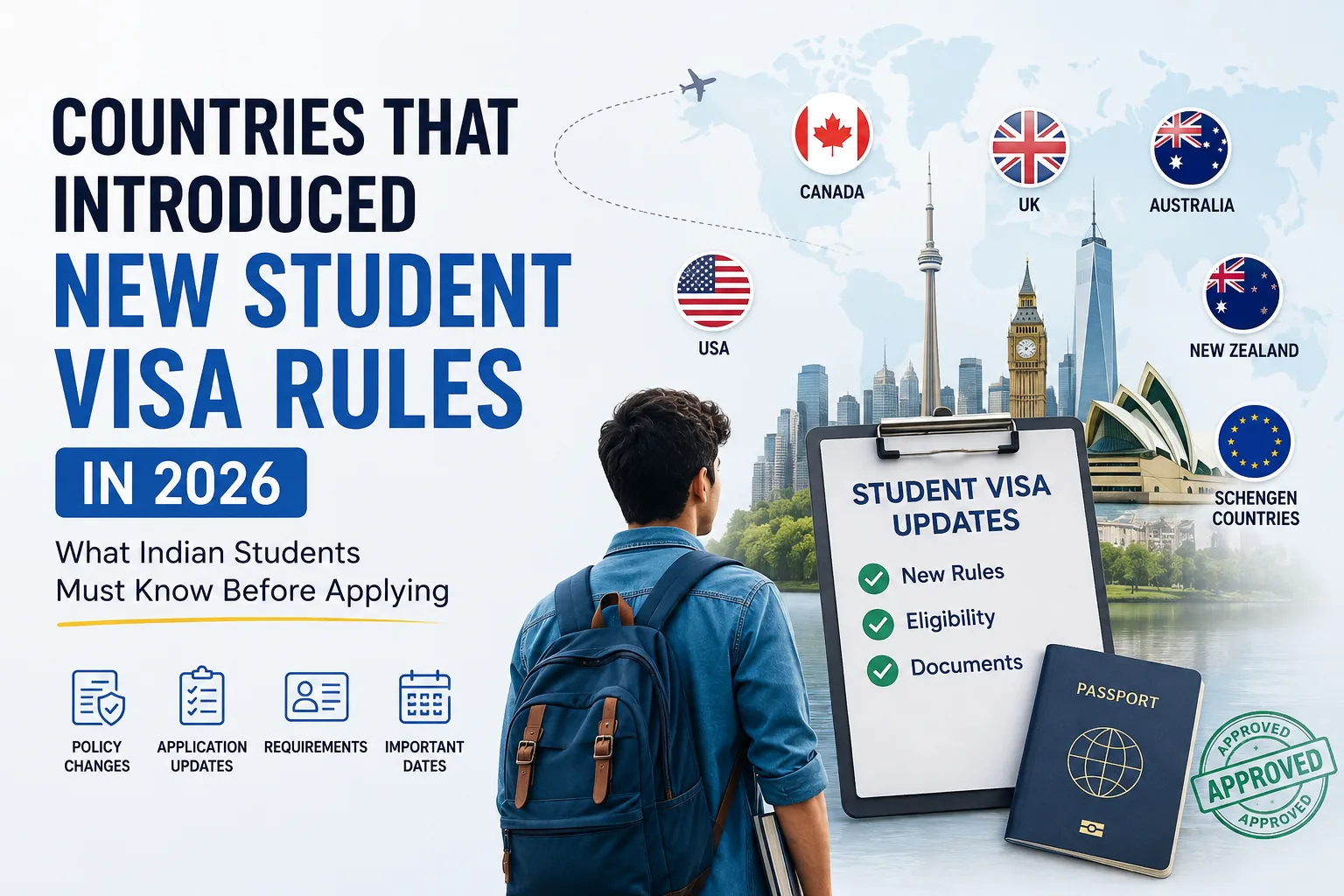
Student Visa Rules in 2026: Latest Updates Every Indian Student Should Know
August 10 2026
Best Cities in New Zealand for Indian Students in 2026: Jobs, Rent, Student Life & Part-Time Opportunities
August 6 2026
AI-Proof Careers Abroad: Degrees That Will Stay Relevant Beyond 2030
July 13 2026